
Last Updated on July 15, 2026
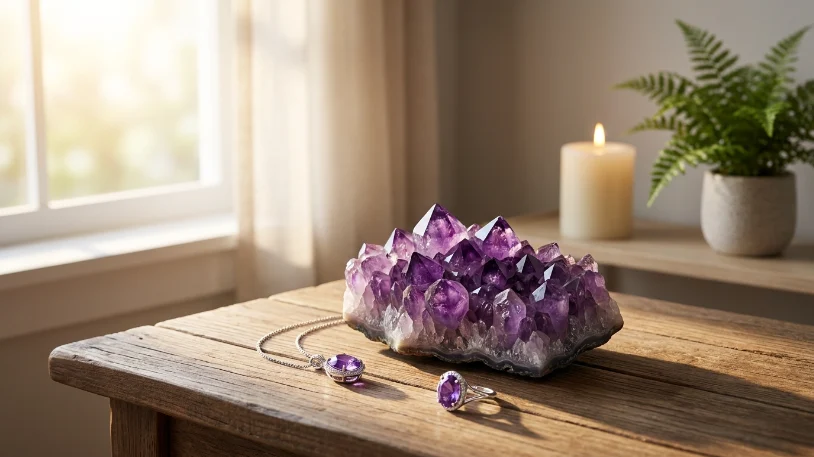
Amethyst is a purple variety of quartz that symbolizes peace, wisdom, protection, spiritual growth, clarity, and emotional balance. Throughout history, people have associated amethyst with calming the mind, enhancing intuition, and promoting inner strength. Today, it is one of the most popular gemstones for jewelry, meditation, birthstone gifts, and crystal collections.
Few gemstones have captured human fascination quite like amethyst. Its rich shades of purple have inspired myths, royal traditions, spiritual beliefs, and modern fashion for thousands of years. Whether you’ve received an amethyst necklace as a gift, noticed the crystal in meditation spaces, or simply wondered why this purple gemstone is so popular, understanding the amethyst meaning helps explain its lasting appeal.
For centuries, kings wore amethyst crowns, religious leaders decorated sacred objects with it, and crystal enthusiasts believed it promoted calmness and wisdom. Even today, amethyst remains one of the world’s most loved gemstones because it combines natural beauty with powerful symbolism.
In this guide, you’ll discover the meaning of amethyst, its history, symbolism, healing beliefs, spiritual significance, birthstone connections, color meanings, and practical ways people use it today.
What Is the Meaning of Amethyst?
Amethyst is a naturally occurring purple quartz gemstone whose meaning is commonly associated with:
- Peace
- Protection
- Wisdom
- Spiritual awareness
- Emotional balance
- Inner strength
- Clarity
- Sobriety
- Positive energy
Many people view amethyst as a symbol of calming negative thoughts while encouraging clear decision-making and personal growth.
Although these symbolic meanings are deeply rooted in history and cultural traditions, scientific evidence does not confirm supernatural or healing effects.
Origin of the Name Amethyst
Greek Origins
The word amethyst comes from the Ancient Greek word amethystos, meaning “not intoxicated.”
Ancient Greeks believed the gemstone could protect its owner from drunkenness and overindulgence. Wealthy individuals often drank wine from cups decorated with amethyst because they believed it helped them stay clear-headed.
Roman Influence
The Romans later adopted these beliefs, helping spread the popularity of amethyst throughout Europe.
Over time, its symbolism expanded beyond sobriety to include wisdom, purity, and spiritual protection.
The History of Amethyst
Ancient Egypt
The Egyptians carved amethyst into:
- Jewelry
- Amulets
- Protective charms
- Decorative objects
They believed it offered protection during travel and in the afterlife.
Ancient Greece
Greek mythology connected amethyst to the god Dionysus.
According to legend, the gemstone received its purple color through a story involving wine and divine intervention.
Medieval Europe
During the Middle Ages, amethyst became associated with:
- Royal families
- Bishops
- Nobility
- Religious ceremonies
Purple represented power and dignity, making amethyst a favorite gemstone among rulers.
Modern Times
Today, amethyst remains one of the world’s best-selling gemstones because it is:
- Beautiful
- Affordable
- Durable
- Widely available
- Rich in symbolism
What Does Amethyst Symbolize?
Peace
Many people associate amethyst with emotional calmness and relaxation.
Wisdom
Historically, leaders and scholars viewed it as a stone representing thoughtful decision-making.
Protection
Various cultures believed amethyst protected against negative influences and harmful thoughts.
Spiritual Growth
Crystal practitioners often use amethyst during meditation because they believe it encourages mindfulness and deeper awareness.
Balance
The gemstone is commonly connected with emotional stability and mental clarity.
Amethyst Meaning in Different Cultures
| Culture | Meaning of Amethyst |
|---|---|
| Ancient Greece | Protection from intoxication |
| Ancient Rome | Wisdom and clear thinking |
| Egypt | Safety and protection |
| Christianity | Purity and spirituality |
| Medieval Europe | Royal authority and dignity |
| Modern Crystal Practice | Calmness, balance, and intuition |
Amethyst Spiritual Meaning
Many spiritual traditions believe amethyst supports:
Inner Peace
People often place amethyst near meditation spaces to create a calming atmosphere.
Higher Awareness
Some believe it encourages mindfulness and self-reflection.
Emotional Healing
Crystal enthusiasts associate amethyst with releasing stress and emotional tension.
Positive Energy
Many people use it as part of spiritual rituals intended to promote optimism.
Important: These spiritual beliefs are based on personal traditions and practices rather than scientific proof.
Amethyst Healing Meaning
Many people refer to amethyst as a healing crystal.
It is commonly believed to support:
- Stress relief
- Better sleep
- Emotional balance
- Reduced anxiety
- Improved focus
- Mental clarity
However, there is no scientific evidence proving that crystals treat or cure medical conditions.
Amethyst should never replace professional medical advice or treatment.
What Does the Purple Color Represent?
Purple has long symbolized:
- Royalty
- Luxury
- Creativity
- Spirituality
- Wisdom
- Mystery
- Imagination
Because amethyst naturally displays shades of purple, many people associate the gemstone with these qualities.
Different Shades of Amethyst and Their Symbolism
| Shade | Common Symbolism |
|---|---|
| Light Lavender | Peace and gentleness |
| Soft Purple | Emotional healing |
| Medium Violet | Balance and wisdom |
| Deep Purple | Royalty and strength |
| Dark Violet | Spiritual growth |
Amethyst Birthstone Meaning
Amethyst is the official birthstone for February.
It symbolizes:
- Loyalty
- Courage
- Honesty
- Peace
- Happiness
Many people give amethyst jewelry as birthday gifts to those born in February.
It is also traditionally associated with the 6th wedding anniversary.
Zodiac Associations
Although astrology is based on personal beliefs, amethyst is often connected with:
- Pisces
- Aquarius
- Virgo
- Sagittarius
People interested in astrology sometimes wear amethyst to complement their zodiac signs.
How People Use Amethyst Today
Modern uses include:
Jewelry
Popular choices include:
- Rings
- Necklaces
- Earrings
- Bracelets
- Pendants
Home Decoration
Many people display amethyst clusters in:
- Living rooms
- Offices
- Bedrooms
- Meditation spaces
Meditation
Crystal practitioners often hold amethyst during meditation sessions.
Gifts
Amethyst makes a meaningful gift for:
- Birthdays
- Graduations
- Weddings
- Anniversaries
- Valentine’s Day
Real-Life Examples of Amethyst Meaning
Example 1
Sarah wears an amethyst necklace because it reminds her to stay calm during stressful workdays.
Meaning: Personal symbol of peace.
Example 2
A couple exchanges amethyst jewelry on their sixth wedding anniversary.
Meaning: Love, trust, and commitment.
Example 3
Someone places an amethyst crystal beside their meditation cushion.
Meaning: Spiritual focus and mindfulness.
Example Table: When People Choose Amethyst
| Situation | Why People Choose Amethyst |
|---|---|
| Birthday Gift | February birthstone |
| Meditation | Symbol of calmness |
| Jewelry | Elegant purple gemstone |
| Home Decor | Decorative natural crystal |
| Anniversary | Traditional 6th anniversary gift |
| Personal Collection | Beautiful quartz specimen |
Amethyst vs Other Popular Gemstones
| Gemstone | Primary Meaning | Main Color |
|---|---|---|
| Amethyst | Peace and wisdom | Purple |
| Rose Quartz | Love and compassion | Pink |
| Citrine | Prosperity and optimism | Yellow |
| Emerald | Growth and renewal | Green |
| Sapphire | Loyalty and truth | Blue |
| Ruby | Passion and courage | Red |
Alternate Meanings of Amethyst
While the gemstone is the most common meaning, the word “amethyst” may also refer to:
Color
A rich purple shade inspired by the gemstone.
Decorative Material
Synthetic or natural amethyst used in ornaments and artwork.
Jewelry Style
Many jewelry collections use “amethyst” to describe purple gemstone designs.
Common Myths About Amethyst
Myth: Amethyst Has Proven Healing Powers
Reality: Scientific research does not support supernatural healing claims.
Myth: Darker Amethyst Is Always Better
Reality: Quality depends on color, clarity, cut, and personal preference.
Myth: Only Spiritual People Wear Amethyst
Reality: Many people simply enjoy its beauty without attaching spiritual meaning.
Tips for Buying Amethyst
When purchasing amethyst, consider:
- Rich, even color
- Good transparency
- Minimal visible cracks
- Professional cutting
- Reliable seller
- Natural or lab-grown disclosure
How to Care for Amethyst Jewelry
To keep amethyst looking beautiful:
- Clean with warm water and mild soap.
- Avoid harsh chemicals.
- Store separately from harder gemstones.
- Remove jewelry before heavy activities.
- Keep away from prolonged direct sunlight, which may fade the color over time.
Why Is Amethyst So Popular?
Several factors explain its popularity:
- Affordable luxury
- Beautiful purple color
- Rich historical background
- Strong symbolic meaning
- Wide availability
- Suitable for everyday jewelry
- February birthstone status
- Popular in crystal collections
Frequently Asked Questions
What is the true meaning of amethyst?
Amethyst primarily symbolizes peace, wisdom, emotional balance, protection, and spiritual growth.
Is amethyst a lucky stone?
Many cultures consider amethyst a lucky gemstone, although this belief is based on tradition rather than scientific evidence.
What does wearing amethyst symbolize?
Many people wear amethyst to represent calmness, confidence, wisdom, or personal growth.
Is amethyst connected to healing?
Some crystal practitioners believe amethyst supports emotional well-being, but scientific research has not confirmed healing effects.
Which month is amethyst the birthstone for?
Amethyst is the official birthstone for February.
Can anyone wear amethyst?
Yes. Anyone can wear amethyst jewelry regardless of birth month or zodiac sign.
What chakra is amethyst associated with?
In crystal traditions, amethyst is commonly linked to the Crown Chakra and the Third Eye Chakra, though these concepts are spiritual beliefs rather than scientific facts.
Is natural amethyst expensive?
Compared with many precious gemstones, amethyst is generally affordable while still offering excellent beauty and durability.
Conclusion
The amethyst meaning extends far beyond its striking purple appearance. Across thousands of years, this beautiful quartz gemstone has represented peace, wisdom, protection, spirituality, and emotional balance. From ancient Greek legends to modern jewelry collections, amethyst continues to hold a special place in cultures around the world.
Whether you appreciate it for its elegant color, historical significance, February birthstone status, or symbolic meaning, amethyst remains one of the most versatile and admired gemstones available today. While many spiritual traditions attribute healing and calming properties to amethyst, these beliefs should be viewed as personal or cultural practices rather than scientifically established facts.
If you’re choosing an amethyst for yourself or as a meaningful gift, understanding its symbolism can make it even more special.

Justin Powell is a writer at GramBrix.com who focuses on grammar, clarity and effective communication, helping readers strengthen their language skills.