
Last Updated on July 15, 2026
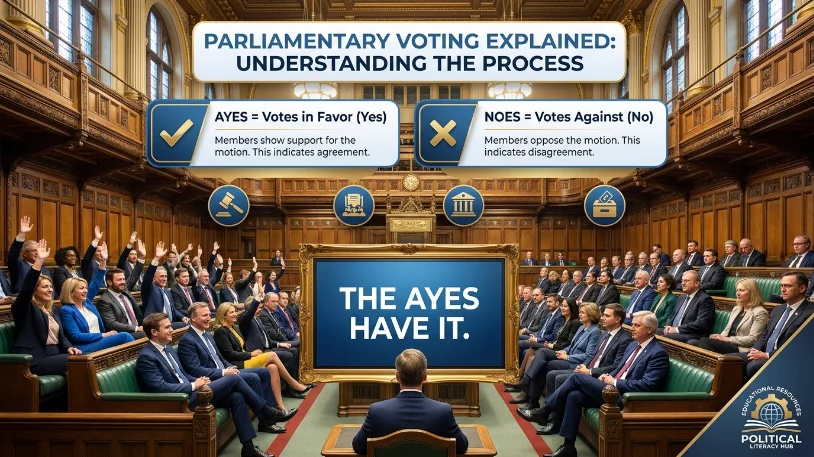
“Ayes” is the plural form of “aye.” It is most commonly used in voting, especially in parliaments, councils, and formal meetings, where “the ayes” refers to the people who voted yes in favor of a proposal. In everyday conversation, aye can also mean yes, particularly in Scotland, Northern England, and nautical traditions.
Have you ever heard someone say, “The ayes have it,” while watching a parliamentary debate or an old movie? If you’re wondering about the ayes meaning, you’re not alone.
Although many people assume “ayes” is just another spelling of “eyes,” it actually has a completely different meaning. The word appears most often in government proceedings, official meetings, historical documents, and traditional speech. It can also pop up in Scottish conversations where aye simply means yes.
Understanding what ayes means helps you better follow political discussions, historical texts, meeting minutes, and even some TV shows or films.
In this guide, you’ll learn exactly what ayes means, where it came from, how it’s used today, common examples, differences between similar terms, and when you should use it yourself.
What Does Ayes Mean?
Simple Definition
Ayes means the votes or people voting “yes” in favor of a motion, proposal, or decision.
It is the plural of aye.
In formal voting, people vote either:
- Aye = Yes
- No = No
When multiple people vote yes, they are collectively called the ayes.
Dictionary Style Definition
| Word | Meaning |
|---|---|
| Aye | Yes; a vote in favor |
| Ayes | The affirmative votes or voters supporting a proposal |
Example:
The ayes were 215, and the noes were 198.
This means:
- 215 people voted yes.
- 198 people voted no.
Origin of the Word “Ayes”
Historical Background
The word aye dates back hundreds of years.
It entered English during the Middle Ages and has long been used to express agreement or affirmation.
Over time, governments and legislative bodies adopted aye as the formal word for voting “yes.”
Its plural became ayes, referring to all affirmative votes.
Why Governments Still Use It
Many English-speaking countries continue using aye instead of yes because it creates a clearer distinction during voice votes.
Imagine hearing:
Yes…
No…
Those words can sound similar in a crowded room.
Instead, officials say:
Aye!
No!
The difference is easier to hear.
Where Is “Ayes” Commonly Used?
Parliament
The most common place you’ll hear ayes is during parliamentary voting.
Example:
The Speaker announced that the ayes had it.
Meaning:
The proposal passed because more members voted yes.
City Councils
Many local governments also use the word.
Example:
The motion carried with seven ayes and two noes.
School Boards
Formal organizations often record votes using:
- Ayes
- Noes
- Abstentions
Example:
Vote Result
- Ayes: 6
- Noes: 1
- Abstain: 2
Historical Documents
Older government records frequently include:
The ayes have it.
or
Ordered by the ayes.
Aye vs Ayes
Understanding the Difference
| Word | Meaning | Example |
|---|---|---|
| Aye | Yes; one affirmative vote | I vote aye. |
| Ayes | Multiple yes votes | The ayes have it. |
Think of it this way:
One vote = Aye
Many votes = Ayes
Ayes in Real-Life Examples
Government Meeting
Chairperson:
All those in favor?
Members:
Aye!
Chairperson:
The ayes have it.
City Council
Minutes:
Motion approved.
Ayes: 9
Noes: 2
Parliament
Speaker:
The ayes have it. The bill is passed.
Homeowners Association
Meeting Notes:
Ayes: 18
Noes: 4
Motion adopted.
Example Table
Common Situations Where “Ayes” Appears
| Situation | Example | Meaning |
|---|---|---|
| Parliament | The ayes have it. | Majority voted yes |
| Council Meeting | Five ayes, one no. | Five supported |
| School Board | Recorded as ayes and noes. | Official voting result |
| Committee Meeting | Motion passed by the ayes. | Proposal approved |
| Historical Record | The ayes prevailed. | Yes votes won |
Can “Aye” Mean Yes in Conversation?
Yes.
Outside formal voting, aye is commonly used as another way to say yes, especially in:
- Scotland
- Northern England
- Some Irish dialects
- Traditional naval speech
Example:
Friend:
Are you coming?
Reply:
Aye!
Meaning:
Yes.
Is “Ayes” Used in Everyday Conversation?
Usually not.
Most people simply say:
- Yes
- Yep
- Yeah
- Certainly
Instead of:
The ayes have it.
Outside official meetings, the plural ayes is relatively uncommon.
Different Tones of “Ayes”
Formal Tone
Used in official meetings.
Example:
The motion carried by the ayes.
Political Tone
Common during legislative debates.
Example:
The ayes have won today’s vote.
Historical Tone
Appears in old legal records.
Example:
The ayes exceeded the noes.
Traditional Tone
Seen in ceremonial speeches.
Example:
Let the ayes be counted.
Ayes vs Yes
| Ayes | Yes |
|---|---|
| Formal voting | Everyday conversation |
| Parliamentary language | Casual speech |
| Official records | Daily communication |
| Refers to affirmative votes | Simple agreement |
Example:
Casual:
Yes, I’ll come.
Formal:
The ayes approved the proposal.
Ayes vs Noes
| Ayes | Noes |
|---|---|
| Votes in favor | Votes against |
| Means yes | Means no |
| Supports motion | Rejects motion |
Example:
Ayes: 52
Noes: 47
The proposal passes.
Ayes vs Eyes
This is one of the most common mistakes.
| Ayes | Eyes |
|---|---|
| Voting term | Body part |
| Means yes votes | Used for vision |
| Formal language | Everyday English |
Correct:
The ayes approved the motion.
Correct:
Her eyes are blue.
Incorrect:
The eyes approved the motion.
Common Sentences Using “Ayes”
Here are some natural examples.
- The ayes have it.
- The ayes carried the motion.
- There were twenty-three ayes.
- The bill passed by the ayes.
- The chair counted the ayes first.
- The secretary recorded six ayes.
- More ayes than noes supported the proposal.
- The ayes approved the amendment.
Alternate Meanings of “Aye”
Although ayes almost always refers to affirmative votes, aye has a few other meanings depending on context.
Scottish English
Means:
Yes
Example:
Aye, that’s true.
Maritime Language
Sailors often say:
Aye, Captain.
Meaning:
I understand and will obey.
Old English Literature
Sometimes used simply as:
Certainly
or
Indeed
Common Mistakes People Make
Mistake 1
Using “ayes” instead of “yes.”
❌ Ayes, I’ll help you.
✅ Yes, I’ll help you.
Mistake 2
Confusing ayes with eyes.
❌ The eyes voted.
✅ The ayes voted.
Mistake 3
Using ayes in casual texting.
Most people don’t text:
Ayes!
Instead they write:
- Yes
- Yeah
- Yep
Professional Alternatives
Depending on context, you may use:
| Instead of | Use |
|---|---|
| Aye | Yes |
| Aye | Certainly |
| Aye | Agreed |
| Aye | Approved |
| Aye | In favor |
Related Words
Understanding similar terms can help avoid confusion.
| Word | Meaning |
|---|---|
| Aye | Yes |
| Ayes | Yes votes |
| No | Negative response |
| Noes | Votes against |
| Abstain | Choose not to vote |
| Majority | More than half |
| Motion | Proposal under discussion |
| Resolution | Formal decision |
When Should You Use “Ayes”?
Use ayes if you’re writing about:
- Parliament
- Congress
- City councils
- Board meetings
- Committees
- Formal voting records
- Historical government events
- Official meeting minutes
Avoid using it in everyday conversations unless you’re intentionally referring to a formal vote.
Interesting Facts About “Ayes”
It Is Hundreds of Years Old
The word has existed for centuries and remains part of formal English today.
It Is Still Official
Many legislatures around the world continue using aye and no during voice votes.
It Appears in Meeting Minutes
Secretaries often record votes as:
- Ayes
- Noes
- Abstentions
It Helps Avoid Confusion
“Aye” and “No” are easier to distinguish aloud than “Yes” and “No” during voice voting.
Frequently Asked Questions
What does ayes mean?
Ayes refers to the people or votes that support a proposal. It is the plural of aye, meaning yes.
Is ayes the same as yes?
Not exactly. Aye means yes, while ayes refers to multiple affirmative votes in formal settings.
Why do governments say “ayes”?
Legislatures use aye because it is easier to distinguish from no during spoken voting.
What does “the ayes have it” mean?
It means the majority voted in favor of the proposal, so it passed.
Is ayes used in everyday English?
Rarely. Most people simply say yes in daily conversation.
Is aye a Scottish word?
Yes. In Scotland, aye is commonly used as another word for yes.
What is the opposite of ayes?
The opposite is noes, which refers to votes against a proposal.
Is “ayes” grammatically correct?
Yes. It is the correct plural form of aye when referring to affirmative votes.
Conclusion
The ayes meaning is simple once you understand its context. It is the plural of aye, representing affirmative votes or the people voting yes during formal decisions. While the word is strongly associated with parliamentary debates, council meetings, and official records, its singular form, aye, is also widely recognized as a traditional way of saying yes, particularly in Scotland and maritime settings.
If you encounter phrases like “the ayes have it” or “record the ayes and noes,” you’ll now know they indicate that a proposal received enough support to pass. Understanding this distinction also helps you avoid common mistakes, such as confusing ayes with eyes or using ayes in casual conversation where yes is more appropriate.
Whether you’re reading political news, historical documents, or meeting minutes, knowing the meaning of ayes makes formal English much easier to understand.

Victoria Lane is a grammar-focused writer at GramBrix.com, passionate about helping readers master the rules of language. She provides clear explanations and practical examples that make writing more accurate, polished and confident.