
Last Updated on July 6, 2026
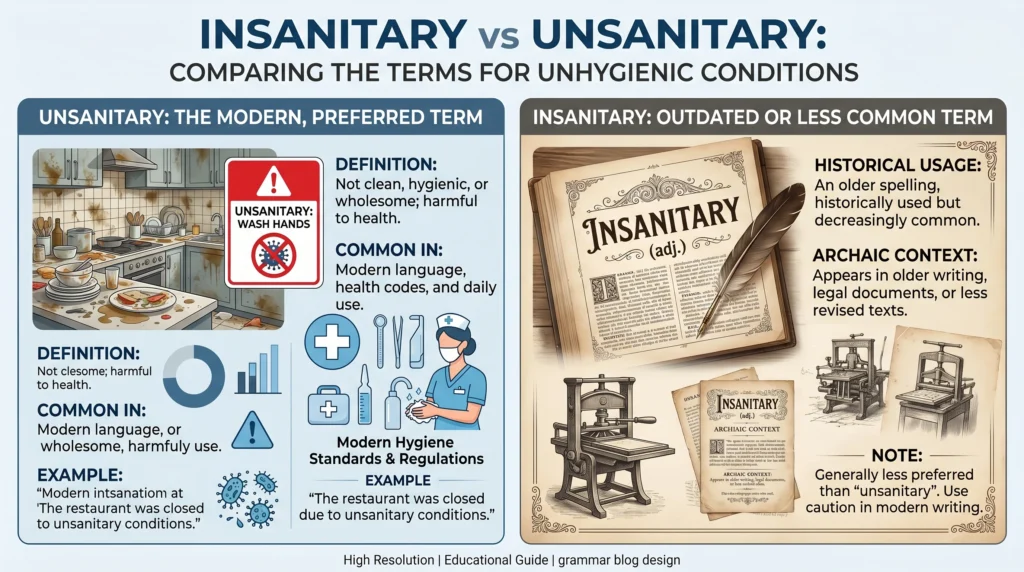
Unsanitary is the most common and widely accepted English word used to describe dirty or unhealthy conditions. Insanitary exists but is considered old-fashioned and rarely used in modern English. In most professional, medical, and everyday situations, “unsanitary” is the correct and preferred choice.
English contains many words that look similar but are not equally common in modern usage. One example is “insanitary” or “unsanitary.” Many people become confused when they see both words online or in older documents.
At first glance, the words appear to mean the same thing:
- Dirty
- Unclean
- Harmful to health
Technically, both words can describe unhealthy conditions, but only one is commonly used in modern English.
Today, “unsanitary” is the standard word in:
- Healthcare
- Business
- Food safety
- Government regulations
- Everyday communication
Meanwhile, “insanitary” is considered outdated and uncommon.
Understanding the correct usage matters because professional writing, SEO content, academic communication, and workplace documents require modern standard English.
In this guide, you will learn:
- The meaning of insanitary and unsanitary
- Which word is correct today
- Grammar and usage differences
- Real-world examples
- Common writing mistakes
- SEO-friendly language tips
The explanations are simple, natural, and beginner-friendly.
Quick Answer
| Word | Modern Usage |
|---|---|
| Unsanitary | Correct and commonly used |
| Insanitary | Rare and outdated |
Simple Summary
- Use “unsanitary” in modern English.
- “Insanitary” is rarely used today.
What Does Unsanitary Mean?
Definition
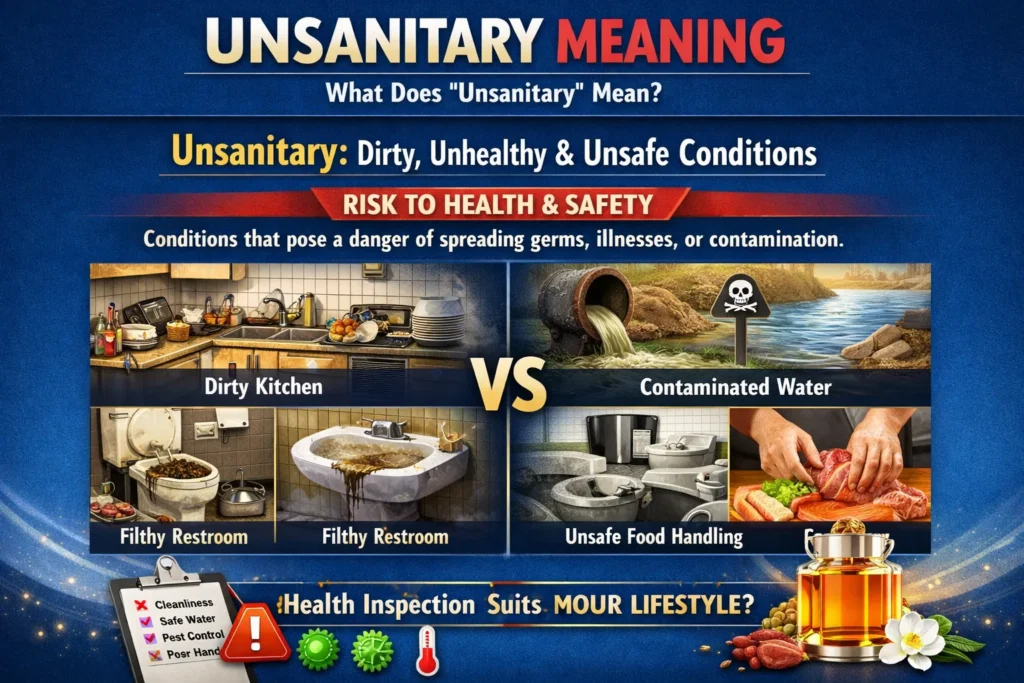
“Unsanitary” describes conditions that are:
- Dirty
- Unhealthy
- Unsafe for hygiene or health
Common Unsanitary Situations
Examples include:
- Dirty kitchens
- Contaminated water
- Poor restroom hygiene
- Unsafe food handling
Modern Usage
“Unsanitary” is commonly used in:
- Medical reports
- Health inspections
- Public safety guidelines
What Does Insanitary Mean?
Definition
“Insanitary” has nearly the same meaning as “unsanitary.”
However, it is:
- Old-fashioned
- Rarely used today
- Uncommon in professional English
Historical Usage
Older English texts sometimes used “insanitary” more frequently.
Why It Sounds Unusual Today
Modern English strongly prefers “unsanitary,” making “insanitary” sound unnatural to many readers.
Main Difference Between Insanitary or Unsanitary
Modern Acceptance
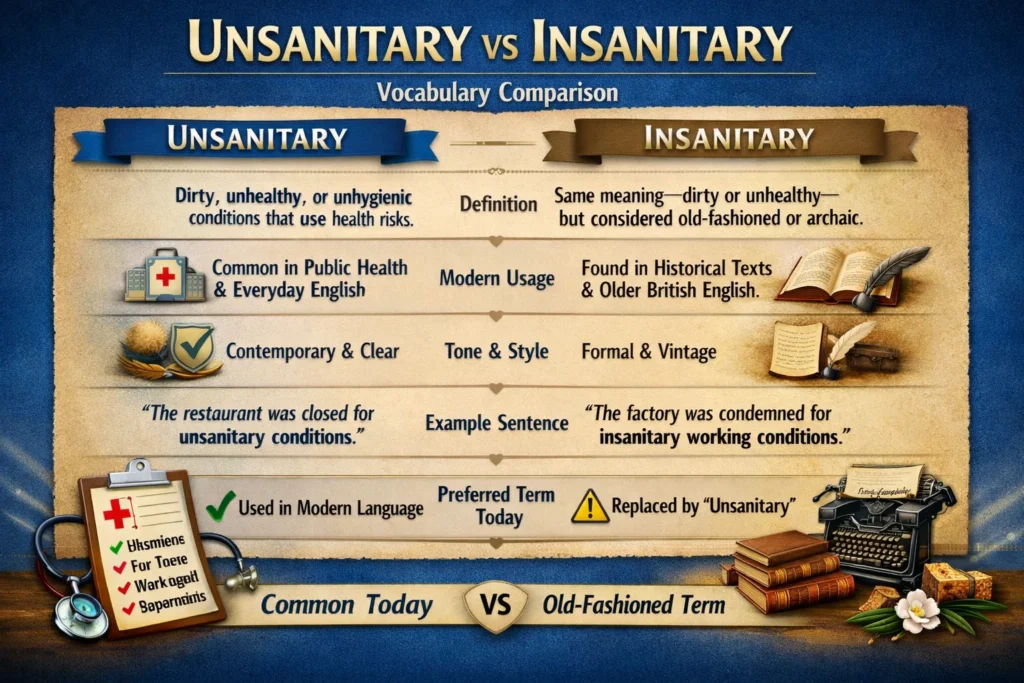
This is the biggest difference.
Unsanitary
- Standard modern English
Insanitary
- Outdated and uncommon
Professional Usage
Unsanitary
Used in:
- Healthcare
- Government documents
- Food safety regulations
Insanitary
Rarely appears in modern professional writing.
Real World Examples
Unsanitary Example
- The restaurant was closed because of unsanitary conditions.
Hospital Example
- Doctors warned about unsanitary medical equipment.
Insanitary Example
- Older newspapers sometimes used the word insanitary.
Why “Unsanitary” Became More Popular
Simpler Modern English
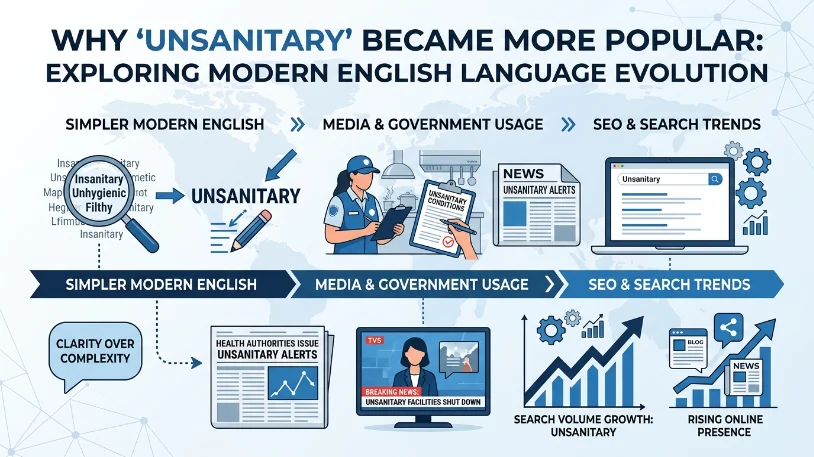
English gradually favored the simpler and more natural-sounding form.
Media and Government Usage
Health organizations consistently use “unsanitary.”
SEO and Online Search Trends
Modern search engines and online content overwhelmingly prefer “unsanitary.”
Common Mistakes People Make
Using Insanitary in Professional Writing
This can sound outdated or incorrect.
Assuming Both Words Are Equally Common
Technically both exist, but usage frequency is very different.
Spelling Confusion
Some people accidentally combine:
- wild
- Sanitary
- Unsanitary
Unsanitary in Health and Safety
Food Safety
Unsanitary kitchens may cause:
- Food poisoning
- Bacterial contamination
Medical Settings
Hospitals require sanitary environments to prevent infection.
Public Health
Unsanitary conditions can spread disease.
Grammar and Language Notes
Prefix Meaning
“Un”
Means:
- Not
- Opposite of
Example:
- Unsanitary = not sanitary
Why “In” Sounds Less Natural Here
Although “in” can also mean “not,” English usage evolved differently for this word.
Related Word Comparisons
Sanitary vs Unsanitary
| Word | Meaning |
|---|---|
| Sanitary | Clean and hygienic |
| Unsanitary | Dirty or unhealthy |
Hygienic vs Unsanitary
“Hygienic” means maintaining cleanliness and health standards.
Regional and Historical Usage

American English
“Unsanitary” is overwhelmingly preferred.
British English
British English also strongly favors “unsanitary.”
Historical Documents
“Insanitary” appears more often in older publications from the 19th and early 20th centuries.
Advantages of Using Modern Standard English
Better Readability
Readers instantly recognize “unsanitary.”
Professional Communication
Modern wording improves credibility.
SEO Benefits
Search engines favor commonly searched vocabulary.
Exercises With Answers
Exercise 1
Which word is most common today?
Answer: Unsanitary
Exercise 2
Which word sounds outdated?
Answer: Insanitary
Exercise 3
Which sentence is correct for modern English?
A. The kitchen was insanitary.
B. The kitchen was unsanitary.
Answer
✅ B
Exercise 4
Can unsanitary conditions affect health?
Answer: Yes
Exercise 5
Is “insanitary” technically a real word?
Answer: Yes, but it is rarely used today.
FAQs
Which is correct, insanitary or unsanitary?
“Unsanitary” is the standard and widely accepted modern English word.
Is insanitary a real word?
Yes, but it is outdated and uncommon in modern writing.
Why is unsanitary more common?
Modern English evolved to favor “unsanitary” in everyday and professional communication.
Can I use insanitary in formal writing?
It is better to use “unsanitary” because readers recognize it more easily.
What does unsanitary mean?
It describes conditions that are dirty, unhealthy, or unsafe for hygiene.
Is unsanitary used in healthcare?
Yes. Hospitals, clinics, and health inspectors commonly use the term.
Can unsanitary conditions spread disease?
Yes. Poor hygiene increases infection and contamination risk.
Do dictionaries include insanitary?
Some dictionaries still list it, but usually mark it as uncommon or old-fashioned.
Is unsanitary better for SEO writing?
Yes. It matches modern search behavior and reader expectations.
Which word should students use?
Students should generally use “unsanitary.”
Conclusion
Understanding the difference between insanitary or unsanitary helps improve writing clarity and professional communication.
While both words technically relate to unhealthy or dirty conditions, “unsanitary” is the modern standard English term used in healthcare, public safety, education, business, and online communication.
“Insanitary” still exists historically, but it sounds outdated and uncommon in modern usage. Most readers, teachers, and professionals expect the word “unsanitary” instead.
For SEO, readability, and natural English writing, using “unsanitary” is the safest and most effective choice.
The easiest way to remember the difference is simple:
- Use “unsanitary” in modern English
- Avoid “insanitary” unless discussing historical language usage

Justin Powell is a writer at GramBrix.com who focuses on grammar, clarity and effective communication, helping readers strengthen their language skills.